
Perfect Streamer – guaranteed delivery of video streams anywhere in the world without using expensive networks

About the product
Perfect Streamer® is server software for the reliable delivery of MPEG-TS television channels over the public Internet, and for the reception, processing, multiplexing, transcoding and OTT/IPTV distribution of those channels.
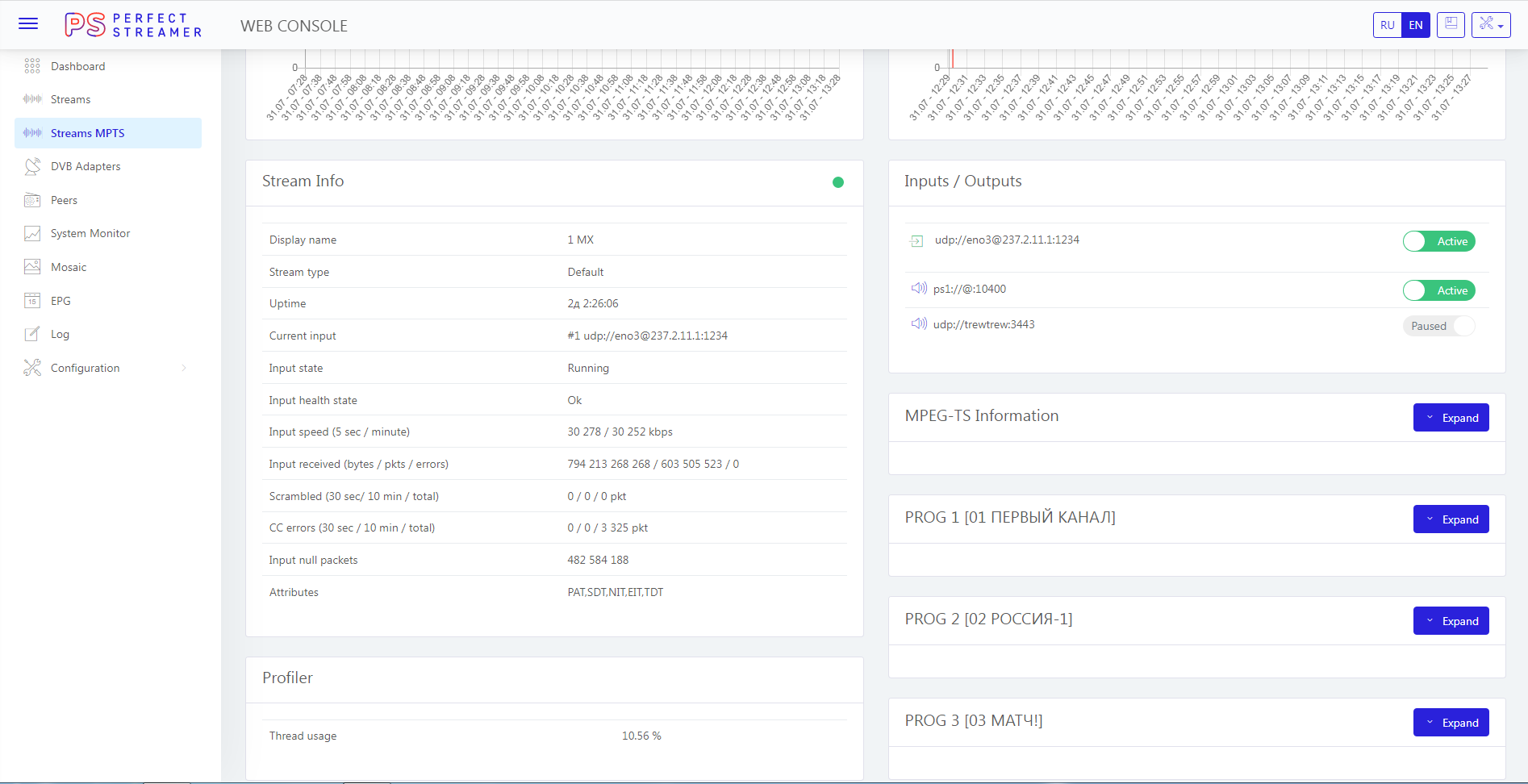
A single installation on a standard x86-64 Linux server covers the whole chain — ingest, filtering and re-multiplexing, transcoding, transport between sites, OTT delivery with a network DVR, and monitoring — through a built-in web interface and a complete HTTP API.
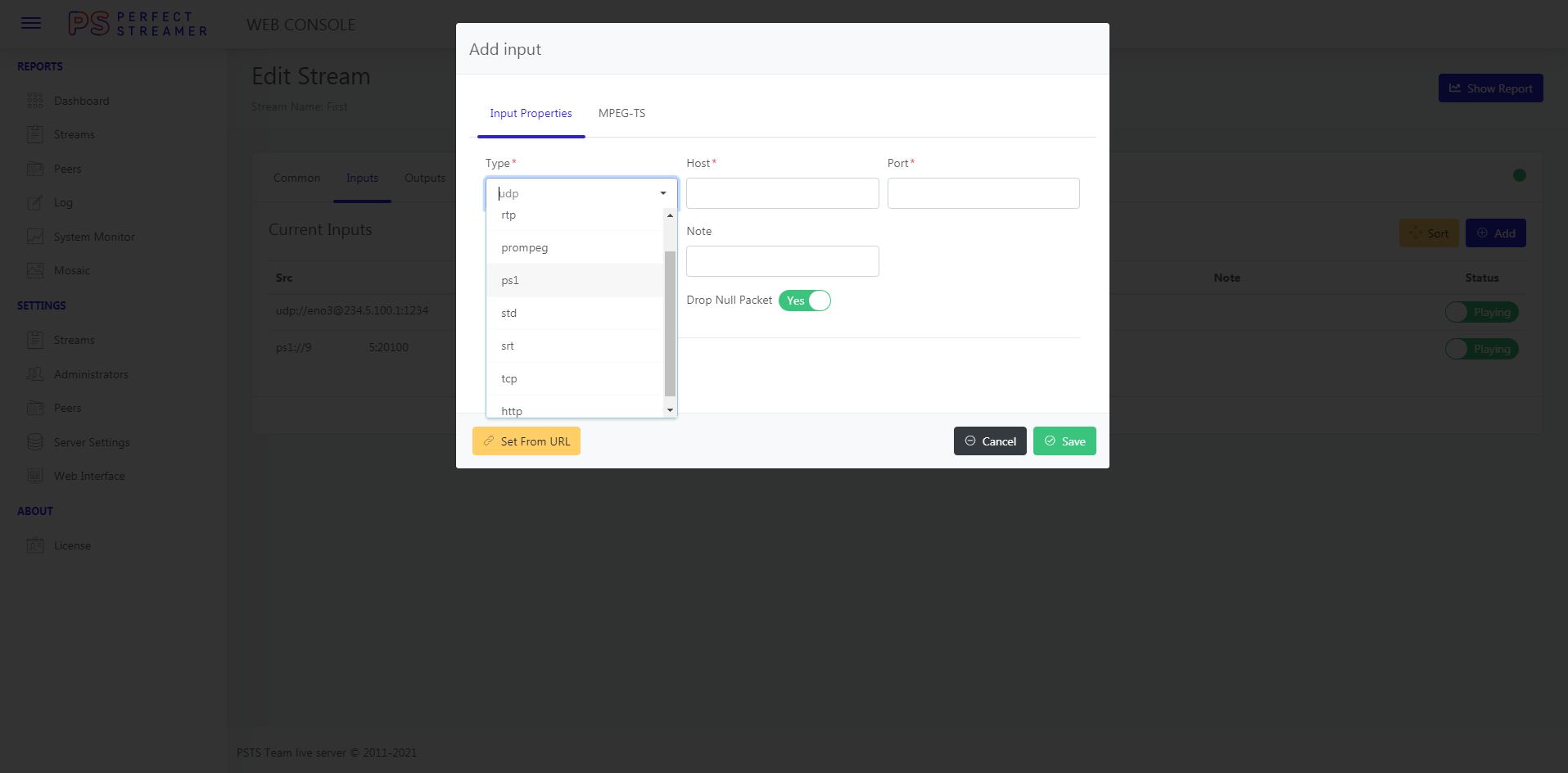
At its core is the proprietary Perfect Stream transport protocol, which keeps delivery reliable and steady without expensive dedicated networks. The open protocols SRT, RIST and Pro-MPEG are supported alongside it, so a channel can run between Perfect Streamer® nodes or with any third-party software or hardware that speaks them:
- Perfect Stream (PS1) — a proprietary transport protocol working on the Automatic Repeat reQuest (ARQ) principle with selective retransmission. Low resource consumption; carries high-bitrate streams including a full MPTS multiplex, and is particularly efficient point-to-multipoint.
- SRT — an open protocol developed by Haivision, based on UDT. Widely adopted, with good packet-loss compensation; listener and caller modes.
- RIST — an open protocol based on RTP/RTCP. Works on the ARQ principle without ACK, using NACK only, which makes it highly efficient. Simple and Main profiles, unicast and multicast.
- Pro-MPEG COP3/RTP+FEC (SMPTE 2022-1/2) — forward error correction with no return channel, supported by a range of hardware manufacturers. Its advantage is low latency; its costs are constant additional traffic and weak recovery under heavy packet loss.

Key features
- One application for x86-64 Linux, with a built-in web interface and a complete HTTP API;
- IP delivery of SD/HD/UHD channels, 60 Mbit/s and above for each stream;
- Reliable transport over public networks with packet loss up to 40% and latency (RTT) up to one second;
- Peer protocols Perfect Stream (PS1), SRT, RIST and Pro-MPEG/RTP+FEC, all with AES 128/256-bit encryption;
- Inputs and outputs: UDP and RTP (unicast/multicast), HLS/HTTP, RTMP/RTMPS, file and device, named pipe, external application; TCP and RTSP as inputs;
- Source redundancy with automatic failover and return to the preferred input;
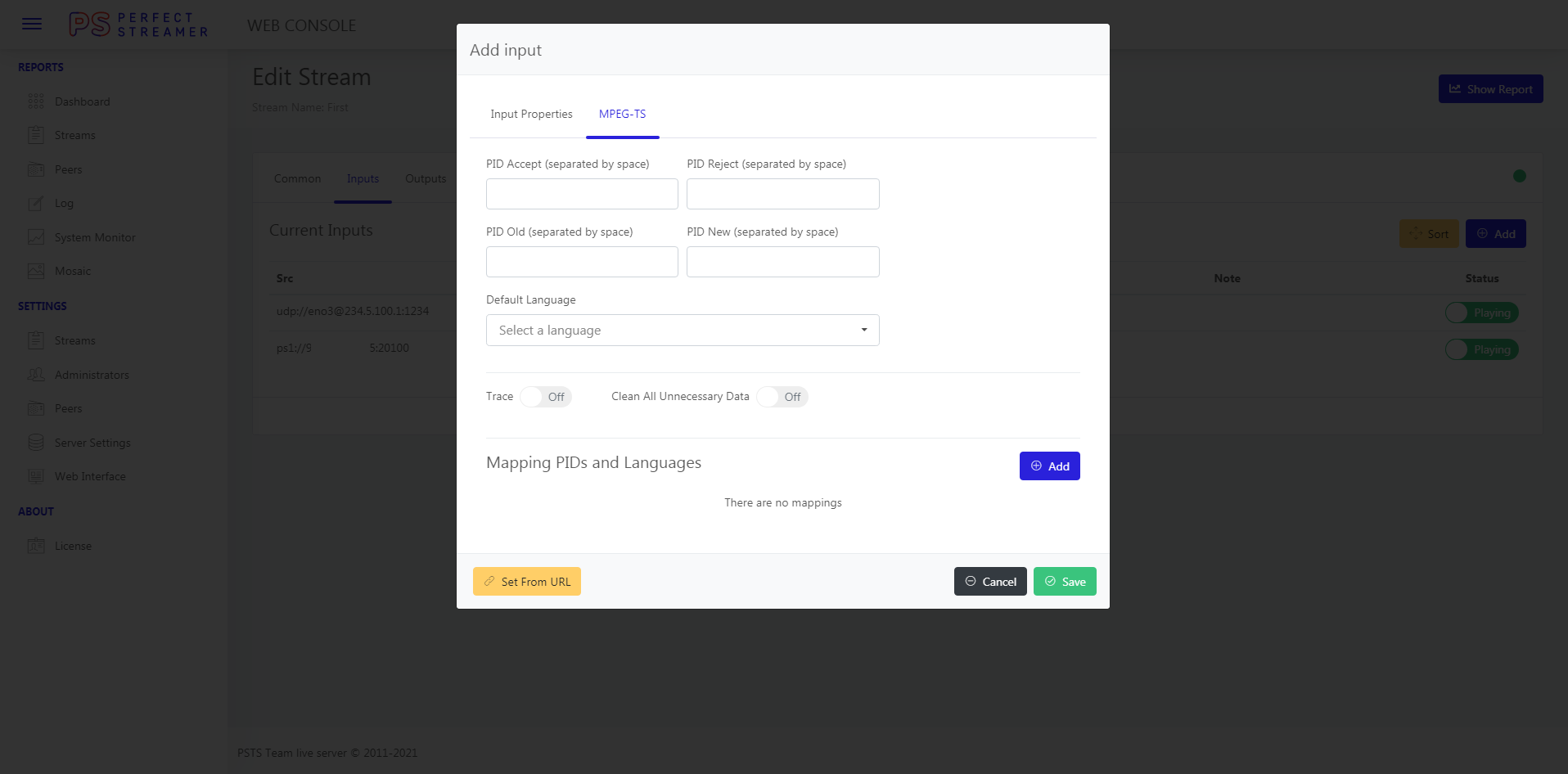
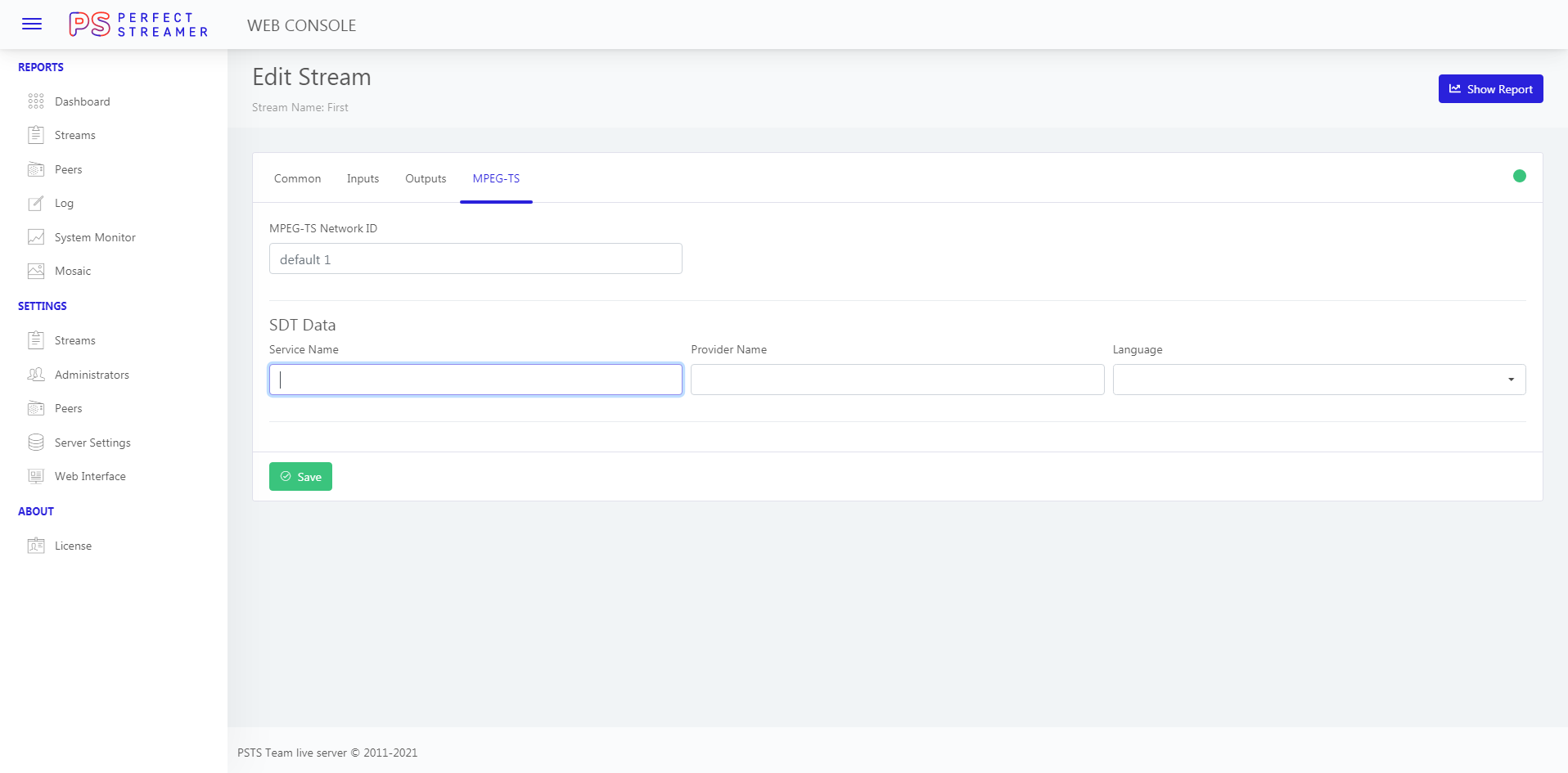
- Processing without re-encoding: PID allow and deny lists, PID remapping, SDT and audio-language editing, PNR change, removal of unneeded tables;
- Stream synchronisation, jitter elimination and correction of PCR marks (PCR Fix);
- Stuffing to a DVB-compatible constant bitrate (CBR);
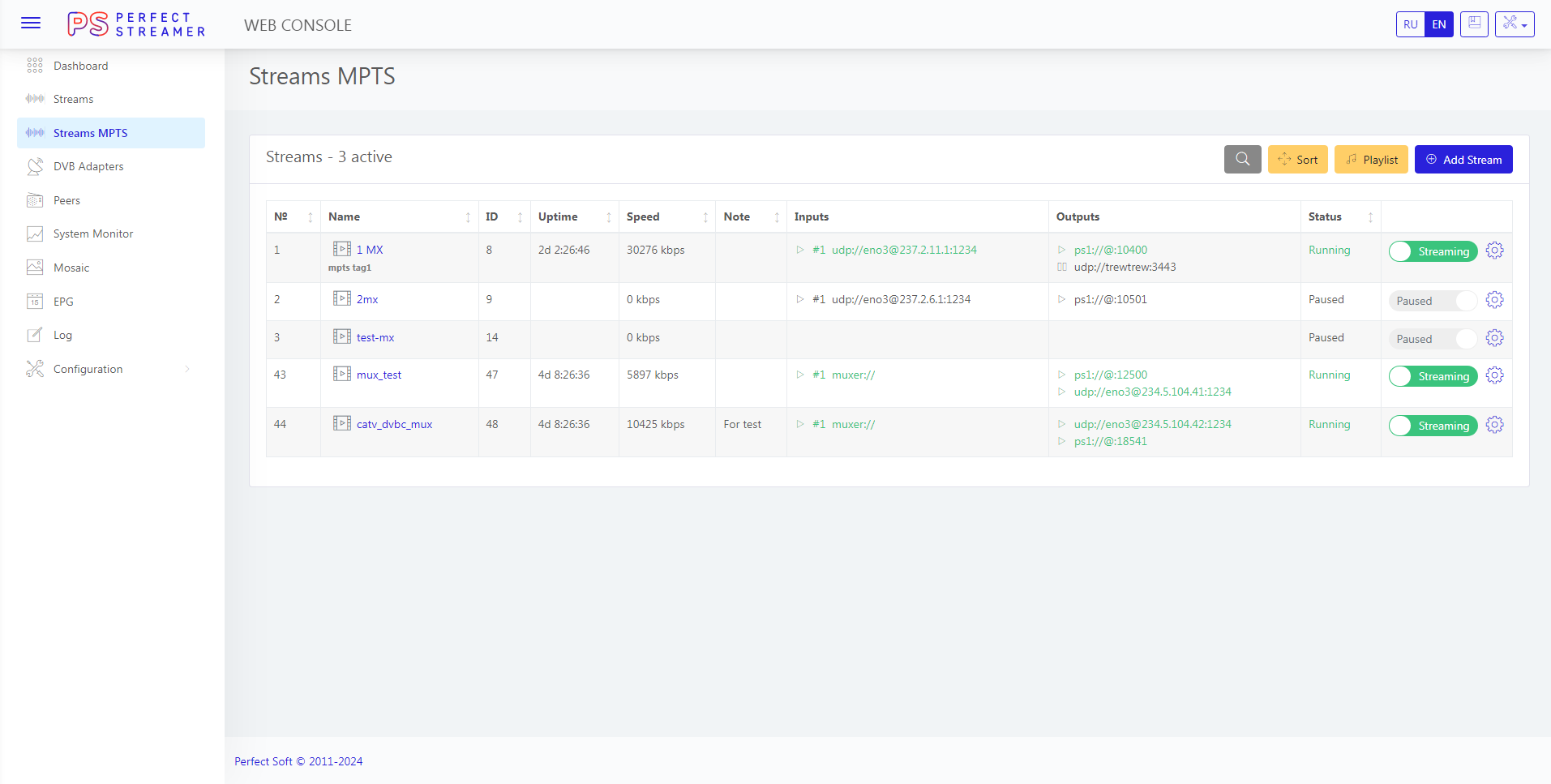
- MPEG-TS multiplexer (MPTS) with PSI/SI generation and a TR 101 290-conformant output;
- Demultiplexer: a single programme extracted from an MPTS into a standalone SPTS;
- Transcoder: hardware on NVIDIA and Intel VPL, or software on CPU; several encoders fed by one decoder for an ABR ladder; MPEG-2, H.264, H.265, AV1;
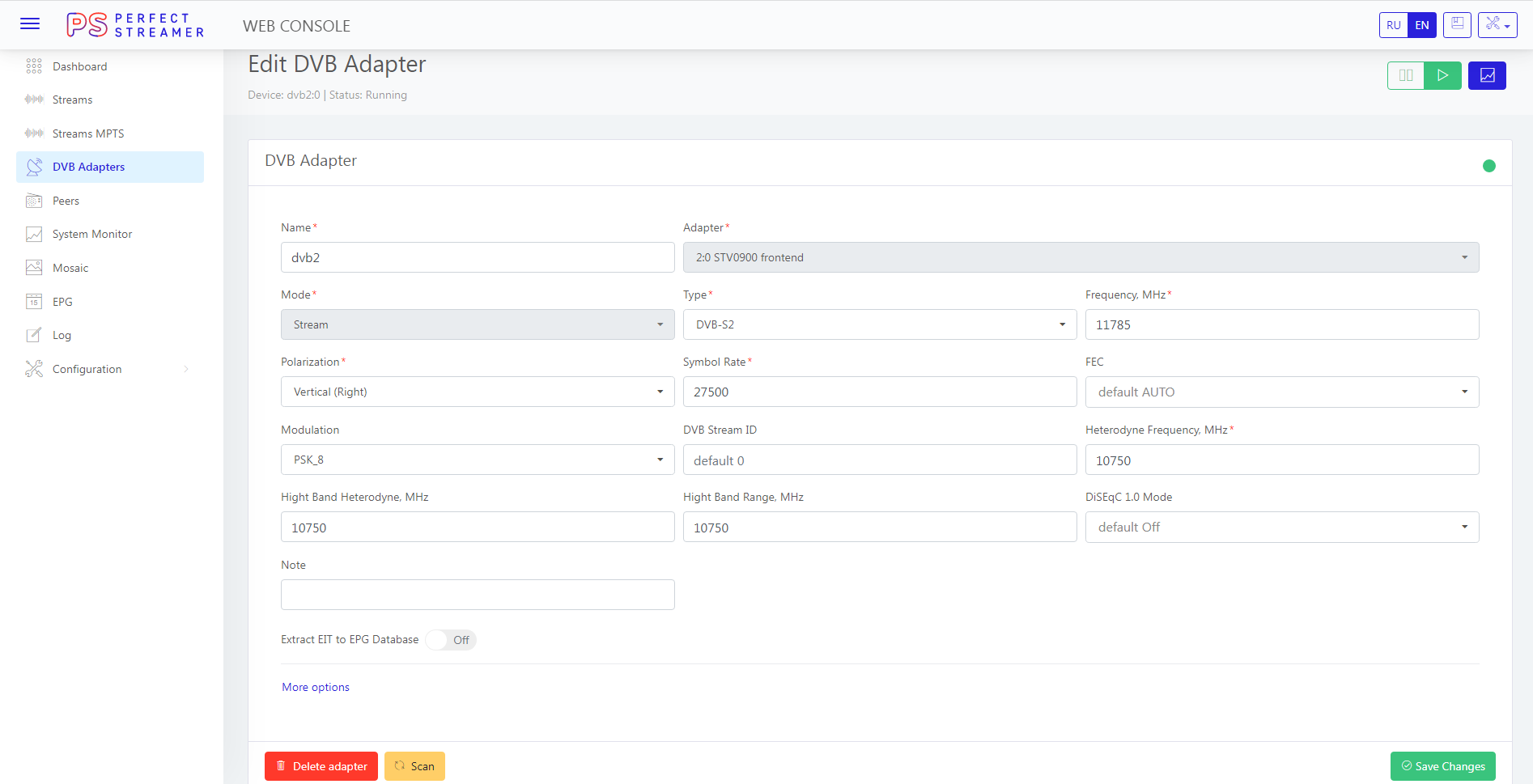
- DVB-S, DVB-S2, DVB-T, DVB-T2 and DVB-C reception with LNB and DiSEqC 1.0 control;
- Transponder catalogue scanner and blind scan, with SNR, signal level and BER measurement;
- Descrambling: hardware CI/CAM (EN 50221) in the node’s own receiver, and a software BISS-1/BISS-E descrambler;
- T2-MI decapsulation from a satellite multistream;
- OTT delivery: HLS, Low-Latency HLS and MPEG-DASH on CMAF over HTTPS and HTTP/3; adaptive bitrate in a single master playlist; WebVTT subtitles from teletext and DVB subtitles;
- Network DVR: every channel recorded while it is being delivered — timeshift, VOD and EPG-aligned catch-up on the same URLs;
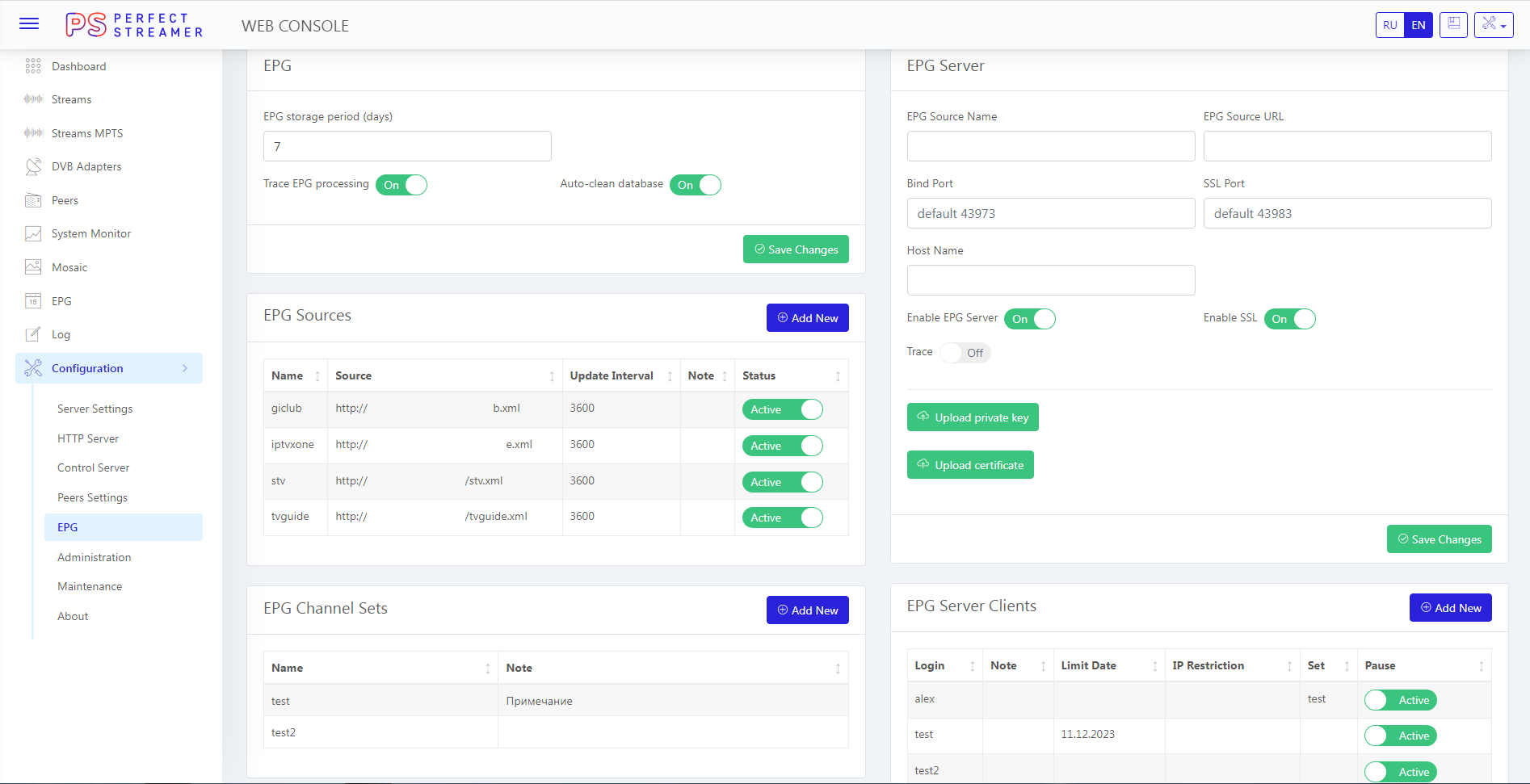
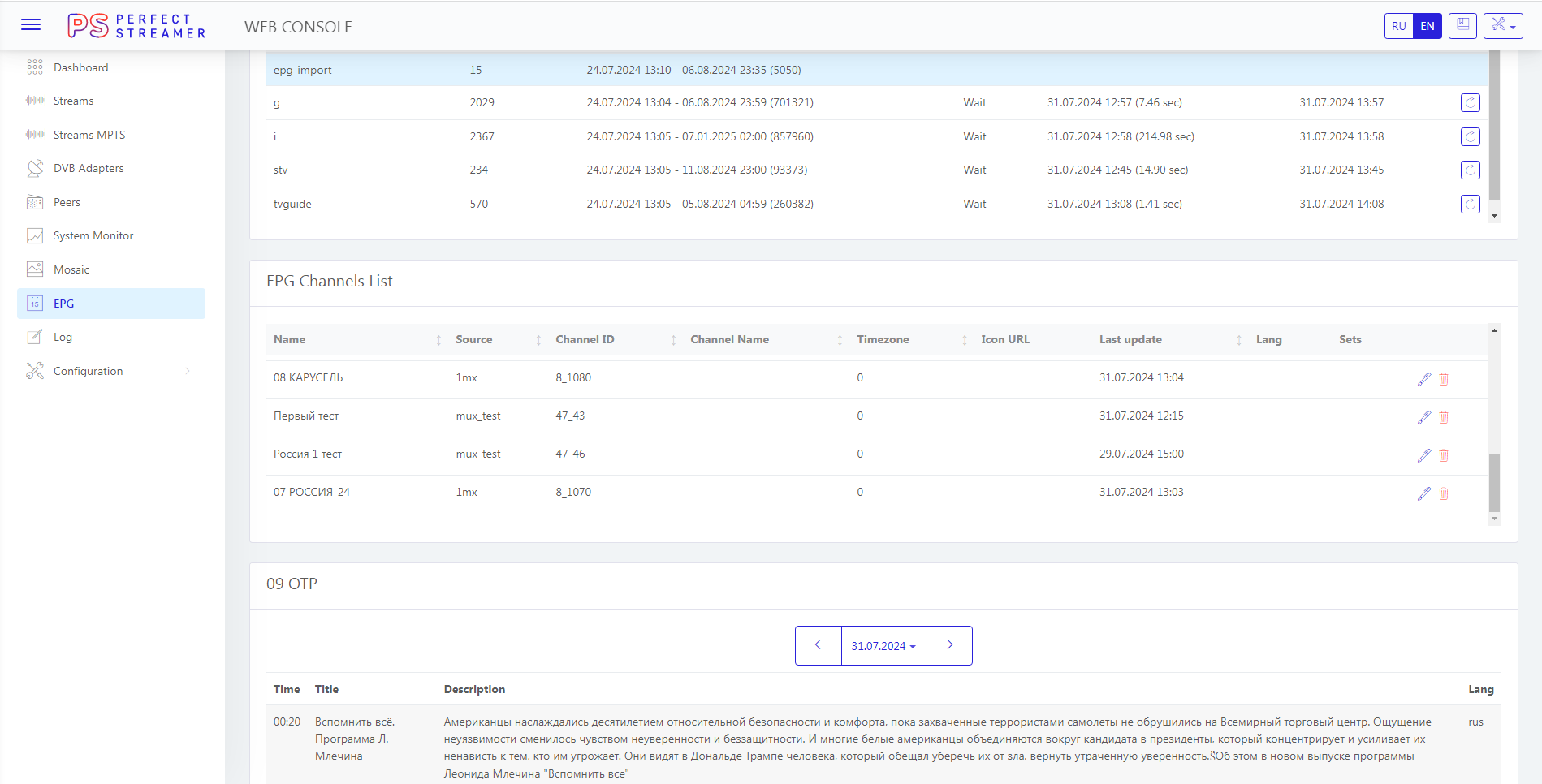
- EPG: EIT capture off air, XMLTV import, EIT generation into the outgoing stream, and an XMLTV server for middleware;
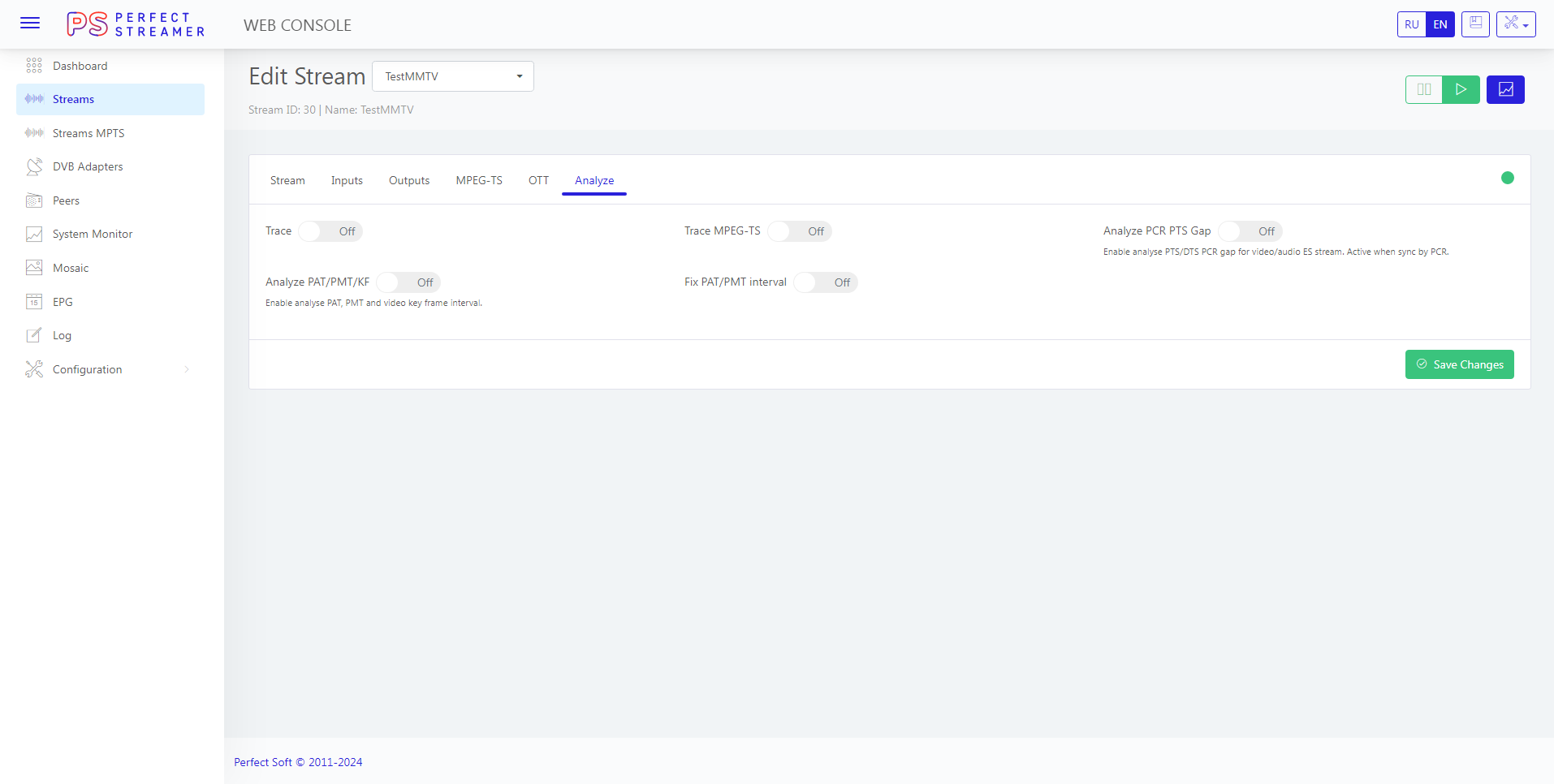
- TR 101 290 analyzer for SPTS and for a whole MPTS multiplex: a single verdict, PCR-drift detector, T-STD buffer model, SCTE-35 analyzer;
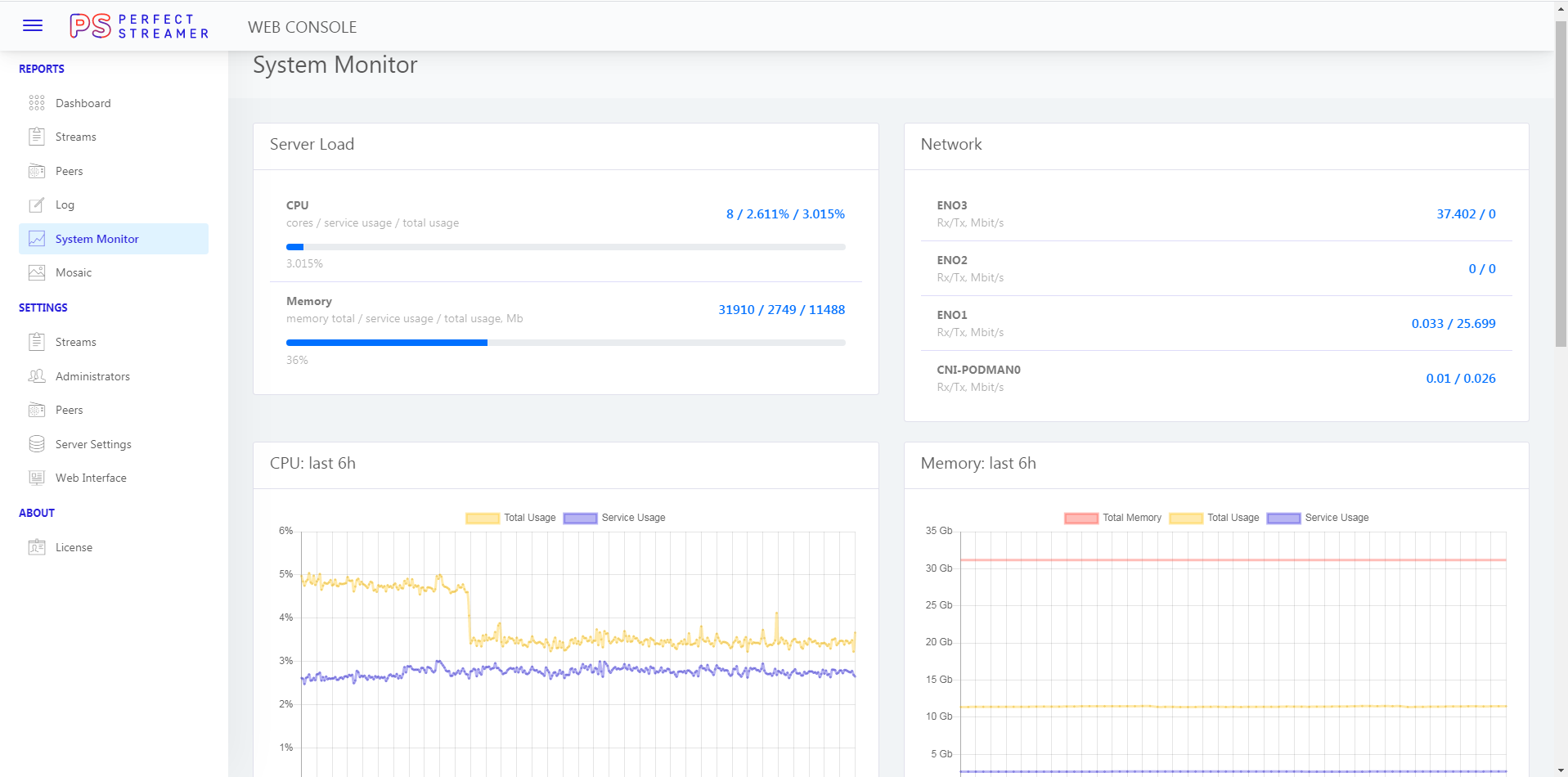
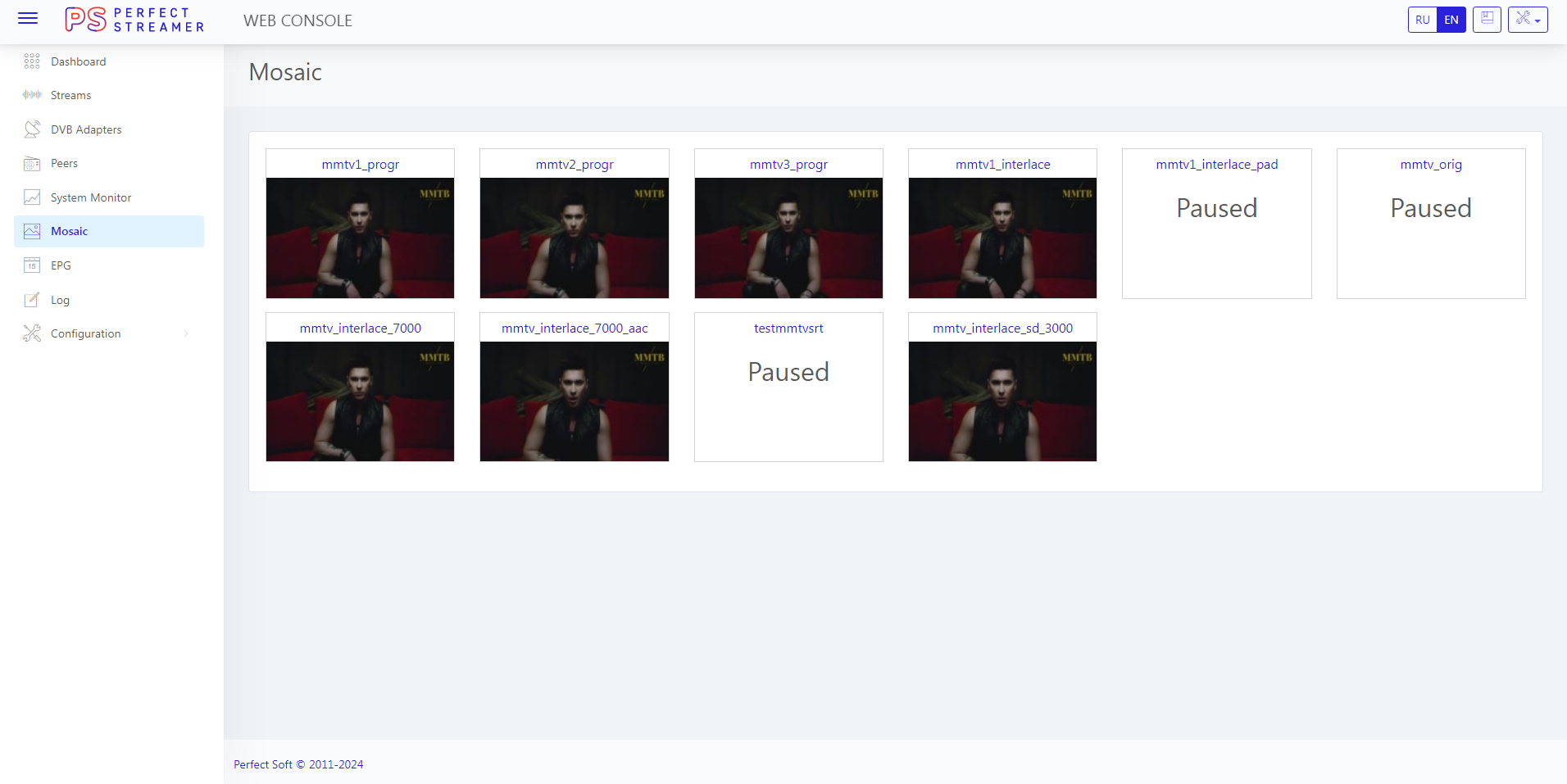
- Unified alerting delivered by Email, Telegram or an external script; channel mosaic; graphs and a local diagnostics database;
- Cluster: servers grouped into isolated domains with an automatic full mesh, a shared library of the addresses and ports in use across the fleet, and domain-wide alerts;
- Session accounting and access control, including authorisation of viewer sessions against an external billing system;
- Metrics export to Zabbix, Grafana, Prometheus, InfluxDB and Nagios; automatic TLS certificates over ACME.

Advantages of using
- Stable functioning via the public Internet;
- Distribution of video streams from one server to any country of the world with minimum expenses on infrastructure;
- Easy maintenance by one dispatcher;
- Streaming in difficult conditions where packet loss is high (up to 40%), and Internet connection is poor (latency up to 1000 ms);
- Works on any standard hardware suitable for installing operating systems Linux CentOS, Ubuntu, Oracle Linux etc.;
- Low hardware requirements;
- High performance: over 20 Gbit/s of traffic from one server;
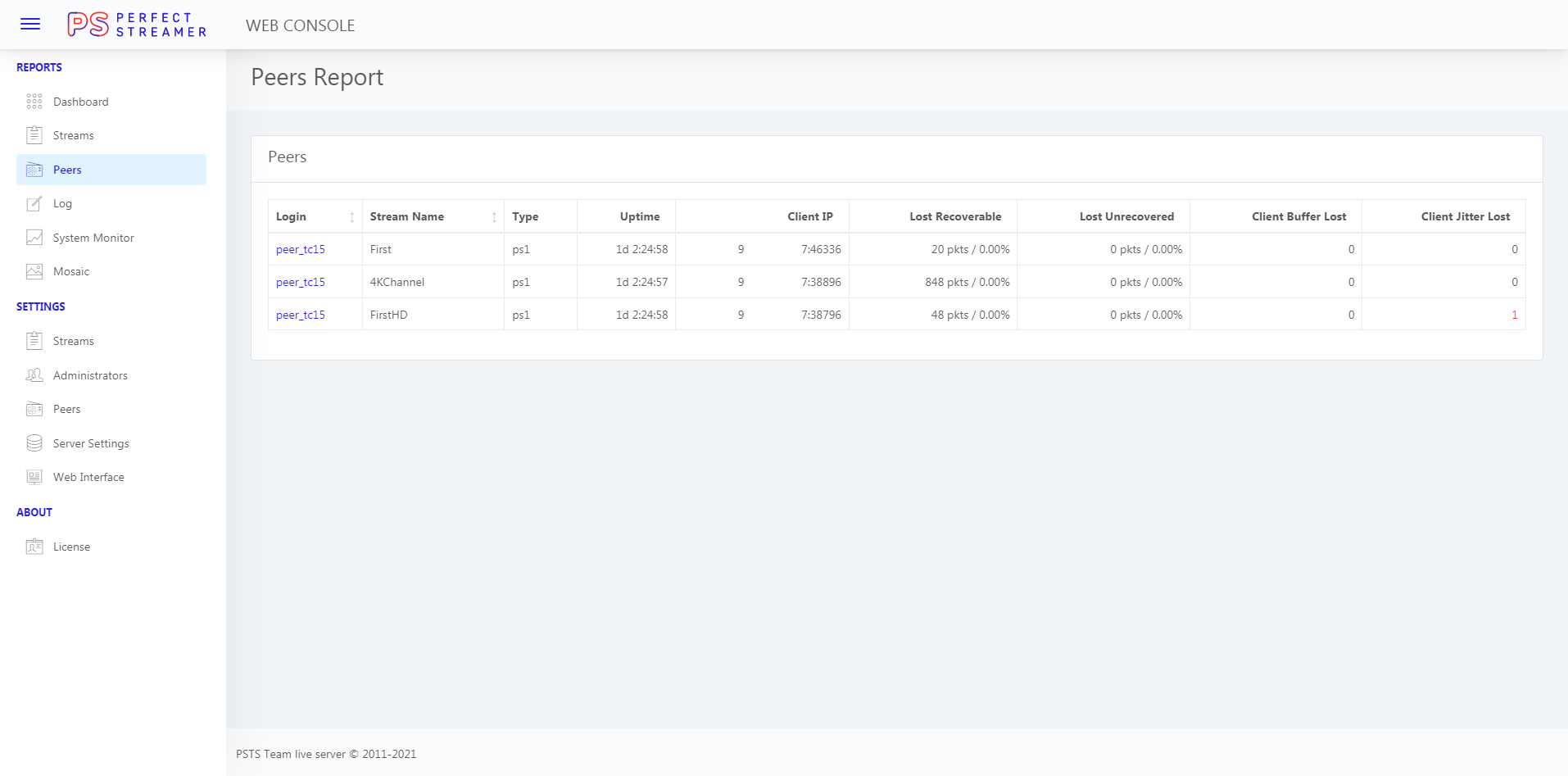
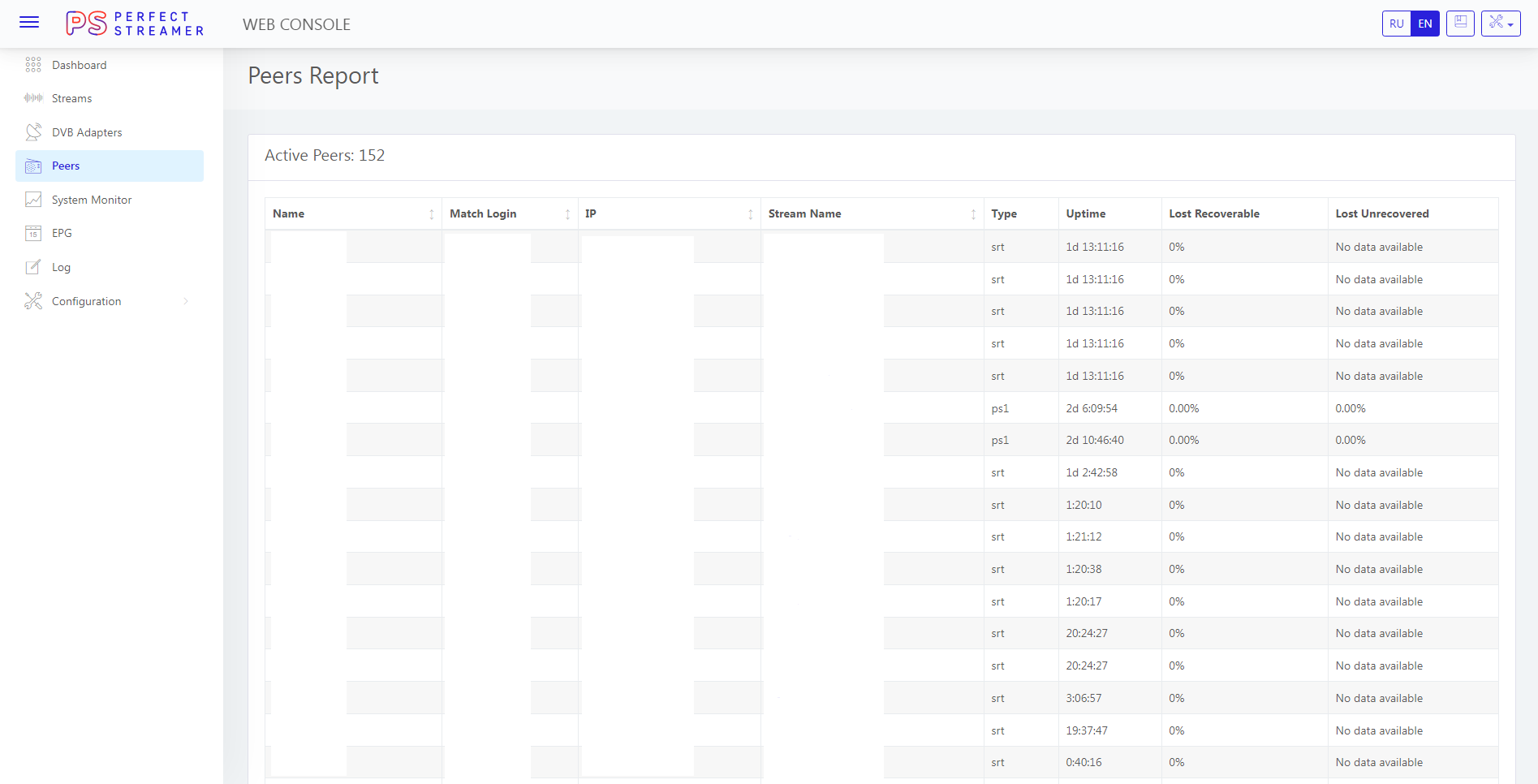
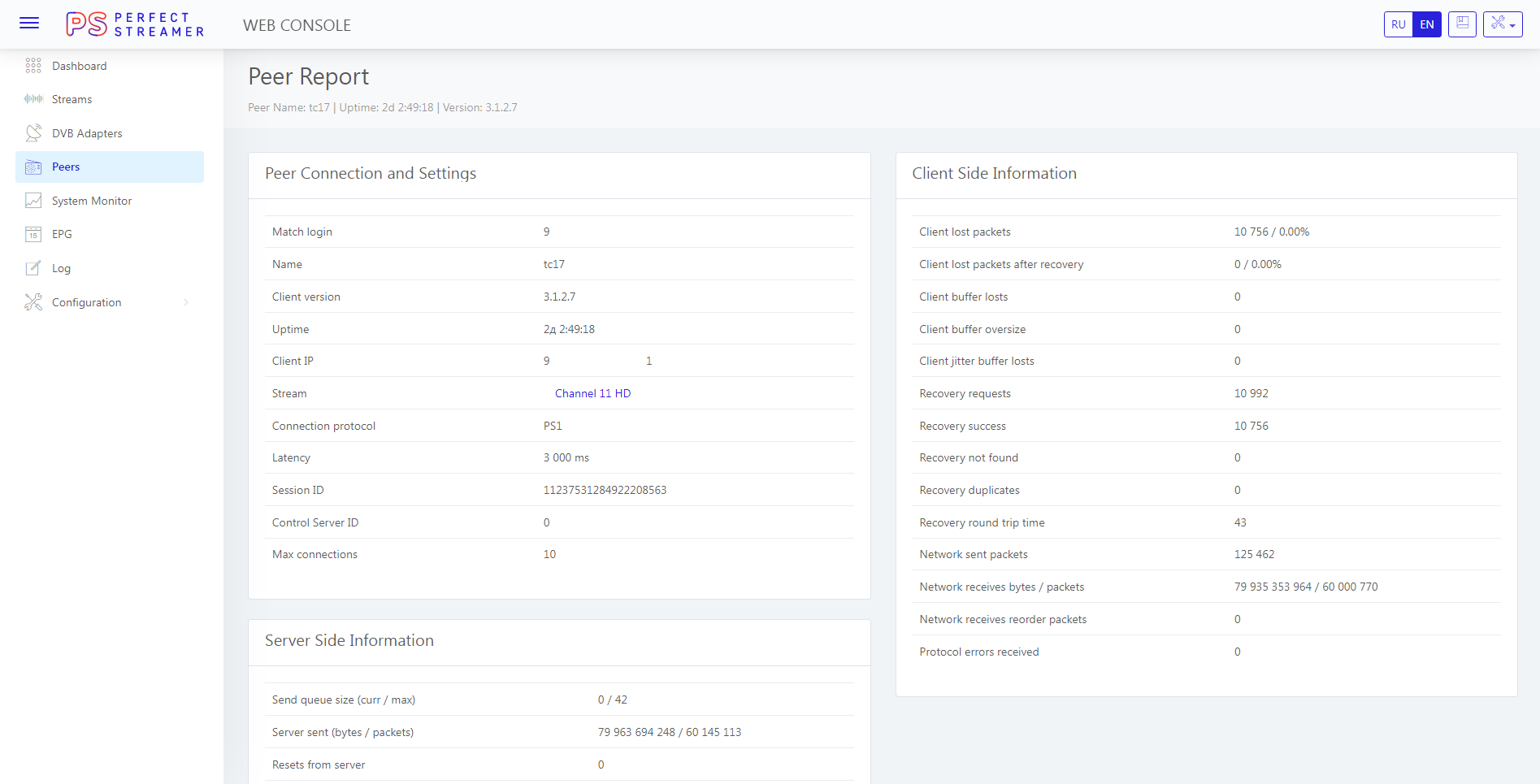
- Real-time monitoring of video stream delivery quality, on the client-side too;
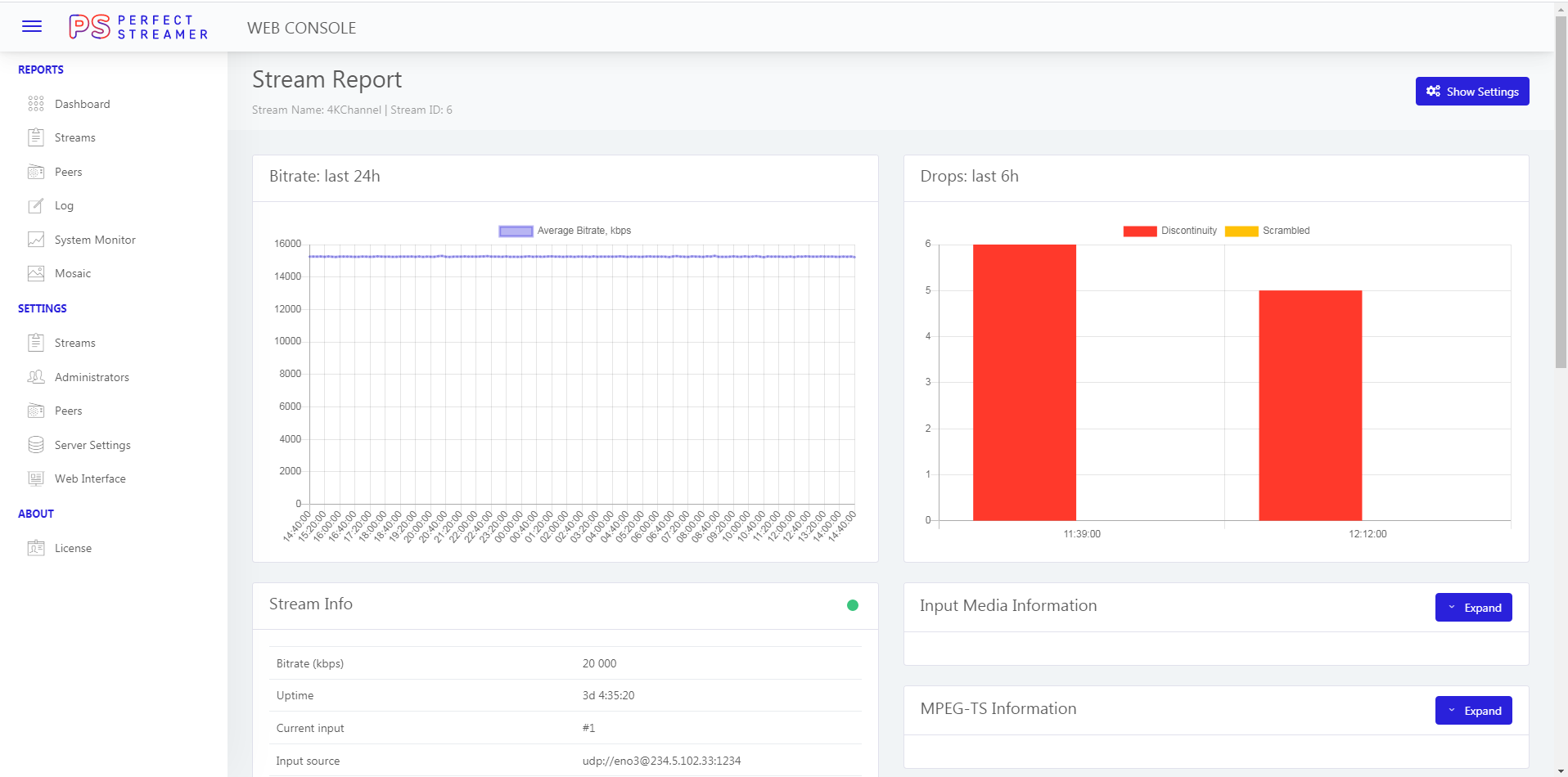
- Statistics, graphs and reports on video stream delivery;
- Correction of broken PCR labels in video streams, especially important when receiving low-quality HLS video streams;
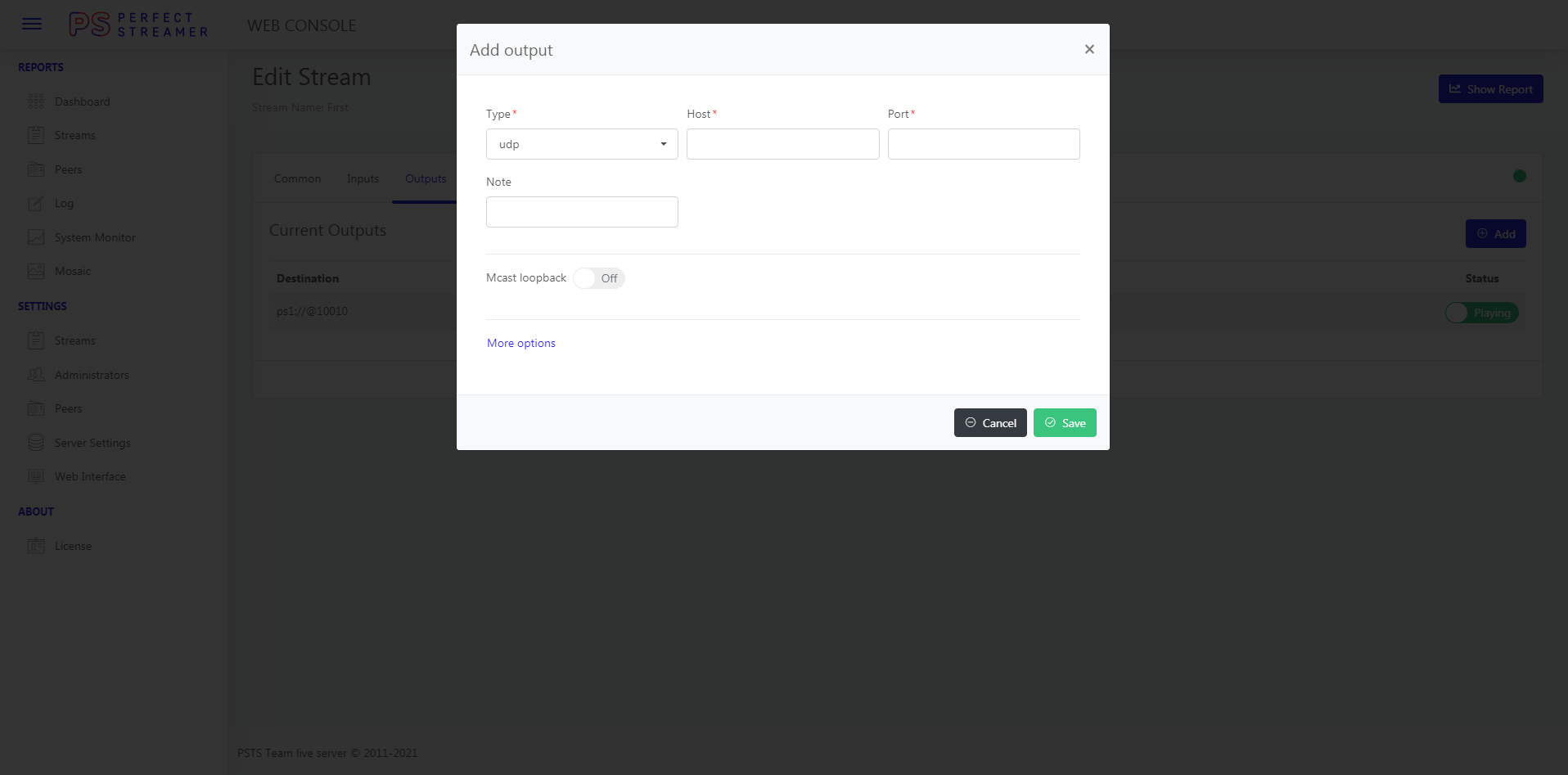
- Supporting standard transport protocols at the server output for delivery to destination hardware of the recipient: UDP Unicast, UDP Multicast, RTP, RTSP, HTTP, HLS, SRT, RIST, Pro-MPEG, RTMP/RTMPS etc.;
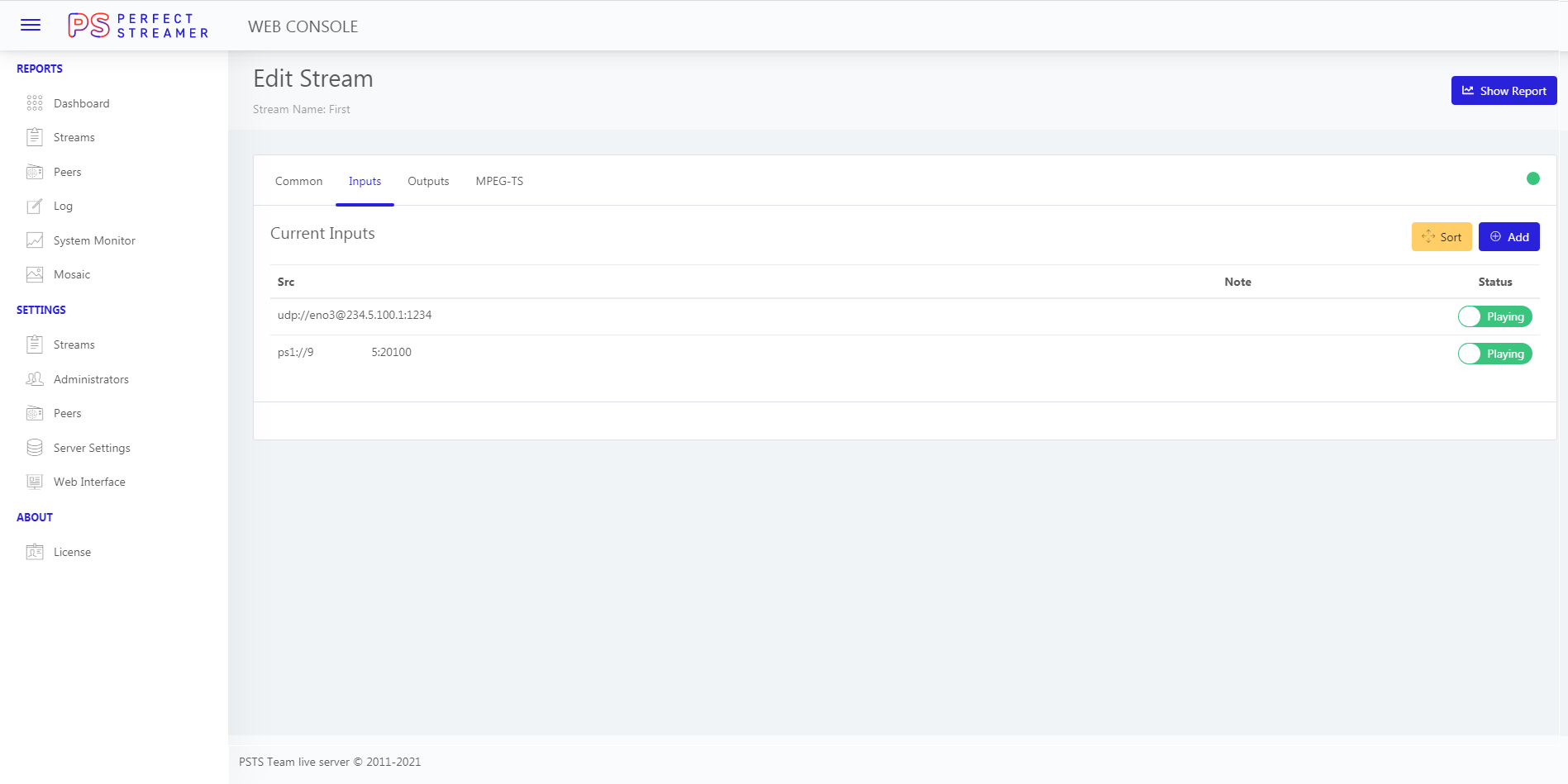
- Capturing TV signal from multiple streams into one with automatic switching function in case of disabling one of the sources;
- Encryption of streams using AES 128/256-bit algorithm to fulfill the requirements of right holders related to streaming security via public Internet network;
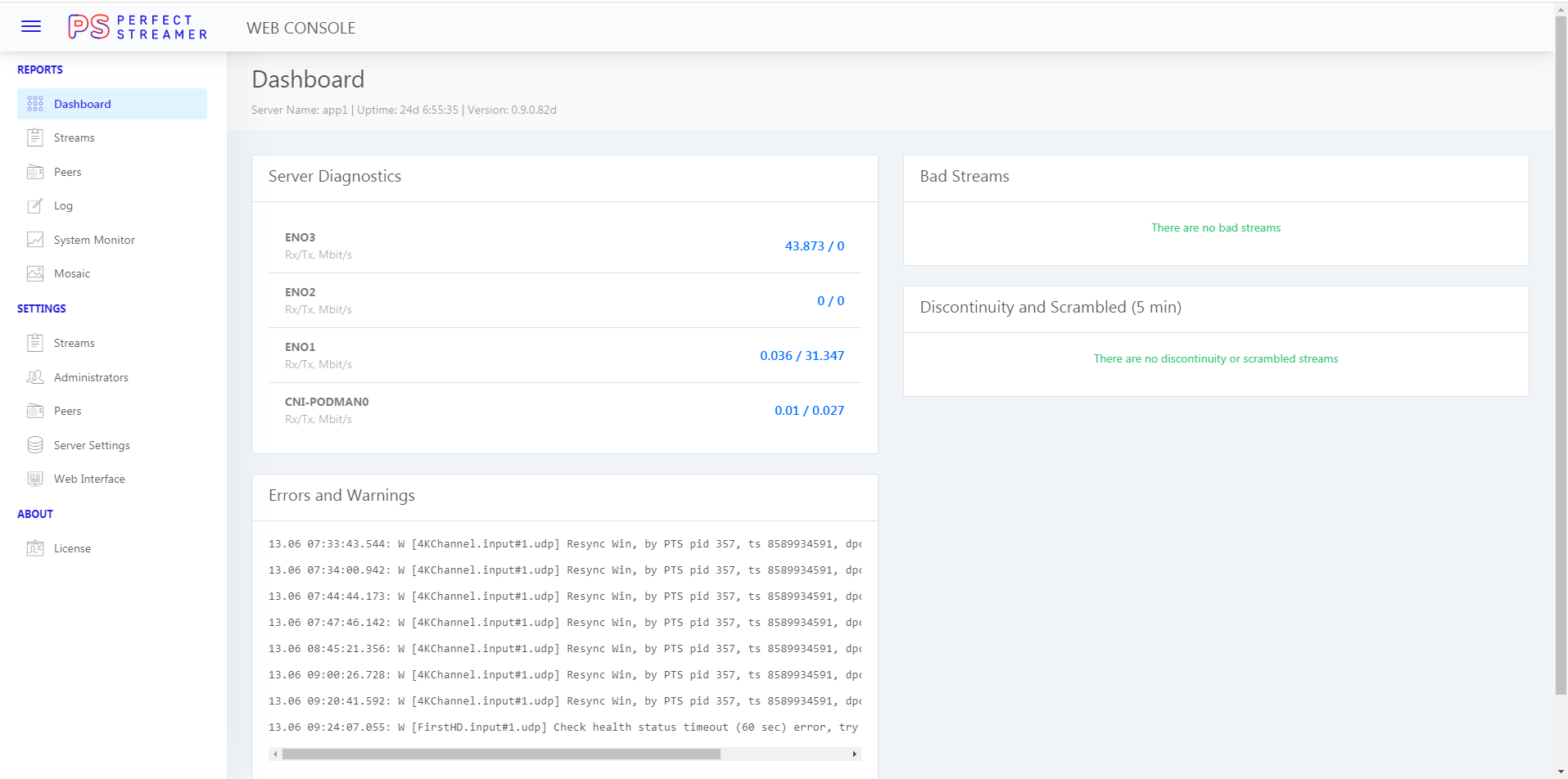
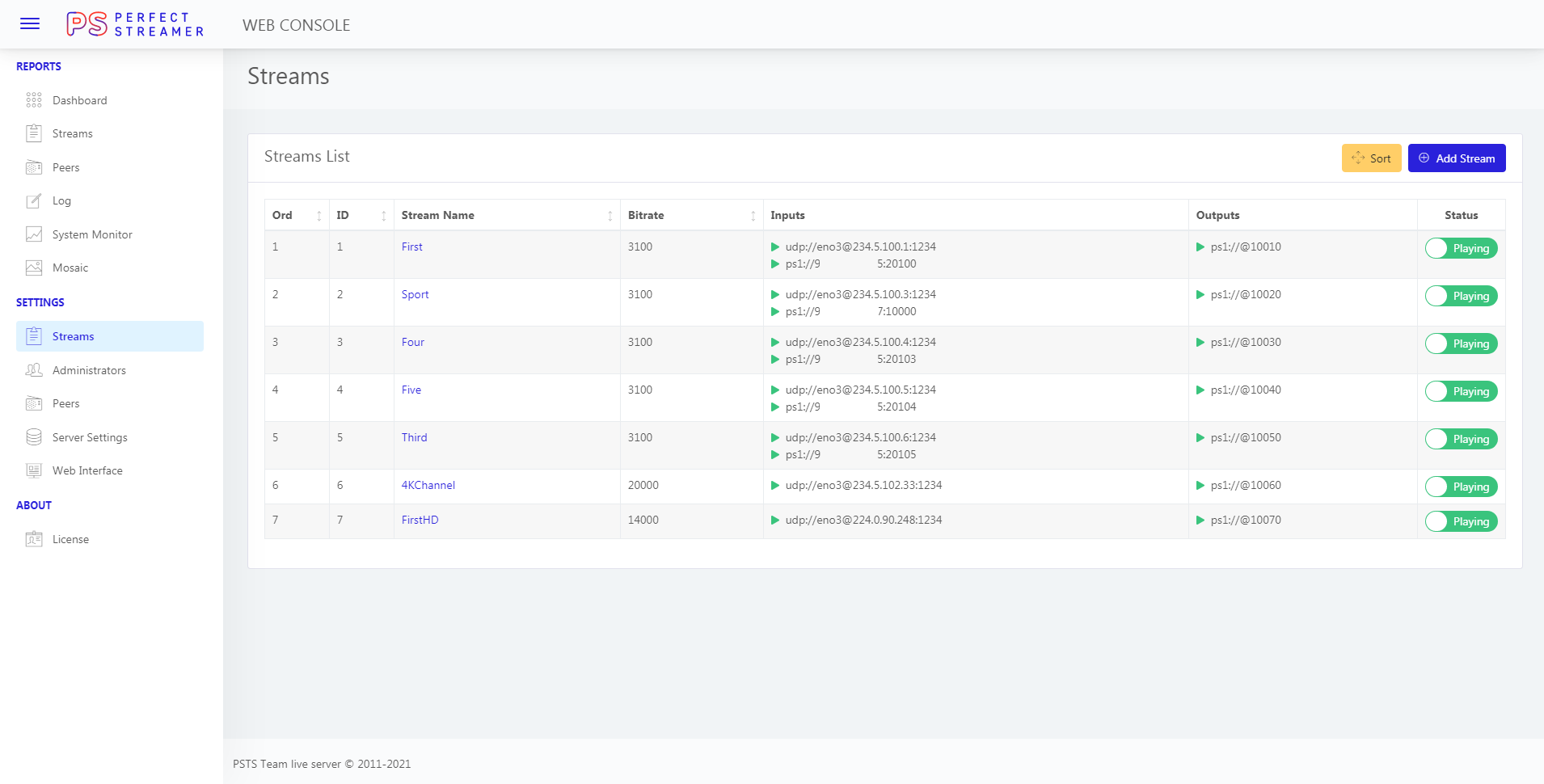
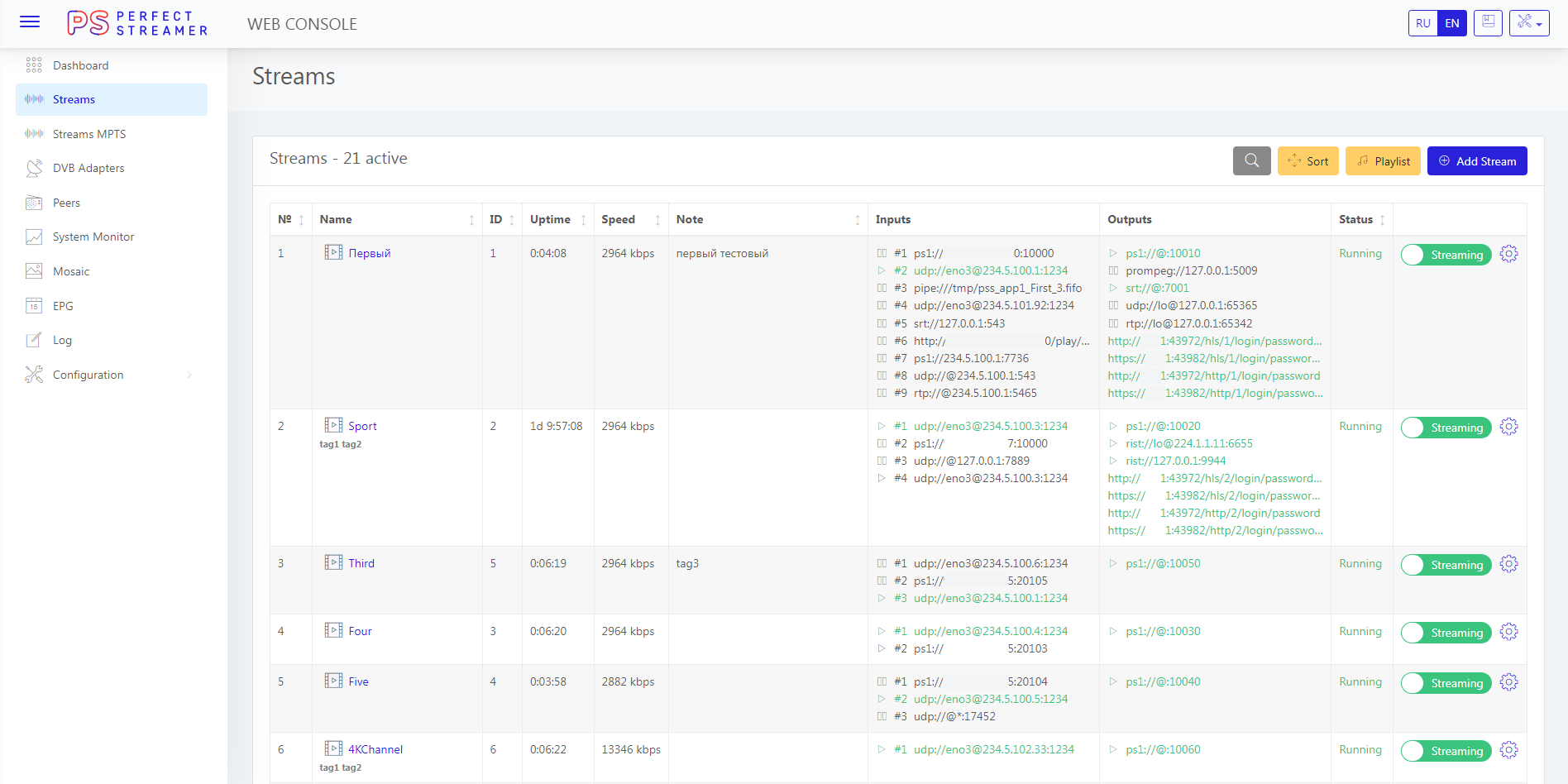
- User-friendly modern web interface for controlling the software product, adapted for controlling from the screen of any device, including a smartphone;
- Reception of channels from satellite or digital terrestrial television without the use of additional software, just DVB-cards installed on the server are enough;
- Quick setup and putting into operation, taking literally 10 minutes;
- Professional activation and security system;
- Integration with Zabbix and other monitoring systems (on order, there are ready-made scripts);
- On-the-fly TV stream transcoding function in the streaming or receiving server to specified format and bitrate. Supports solutions using compatible hardware from Intel and Nvidia (optional).

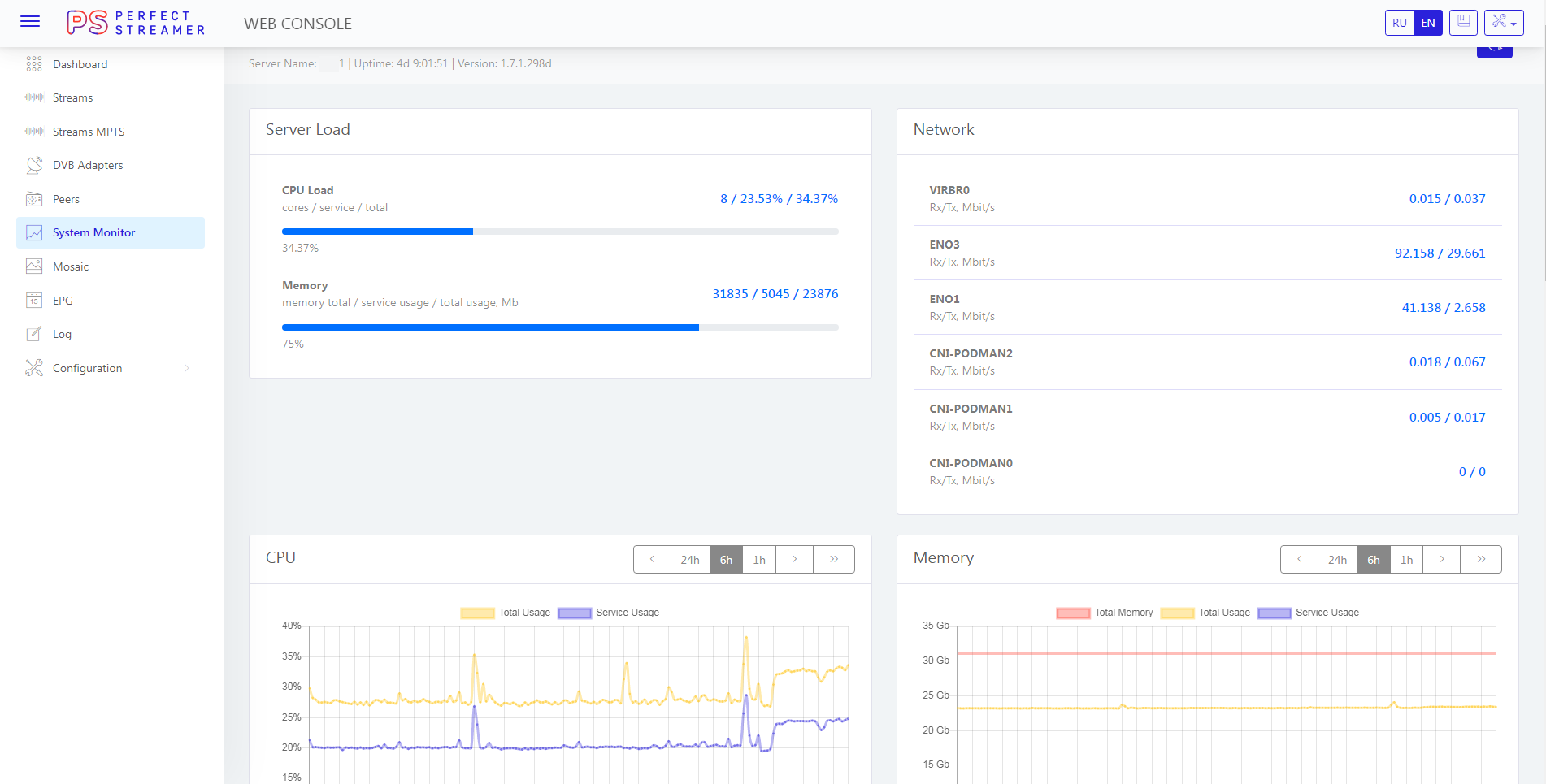
Main clients and use cases

TV operators and Internet providers

Television channels and video content makers

Online cinemas

Aggregators of television channels and content

Online streaming over long distances between sending and receiving points

Streaming any type of video traffic over long distances, for example, between continents etc

Success stories
- One of the world's largest OTT services uses our product to connect its broadcast platforms all over the world. Every day for ten years more than 5 000 000 subscribers have been watching TV with maximum stability thanks to our transport protocol;
- Guaranteed delivery of video streams of television channels via public Internet network from the city of Moscow to the IPTV-network of the largest Internet provider in the Middle East for more than eight years;
- Guaranteed delivery of video streams of TV channels via public Internet network to a number of national operators in CIS countries for more than three years;
- Delivery of the signal of federal TV channels together with local advertisements to hotel chains in South East Asia via the public Internet.